The Fine Line Between Letting Go and Being Let Go - Part 1 (of 3)
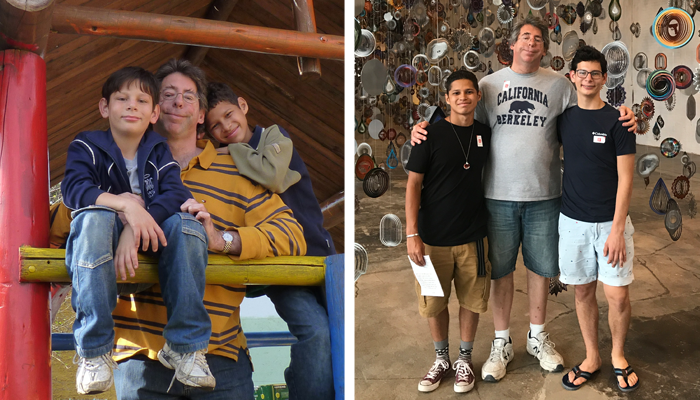
I adopted my son as he was entering his teen
years, and now, too soon, I have seen him off to college. How will his
still tenuous attachment play out when I’m no longer a constant,
physical presence in his life?
https://www.adoptivefamilies.com/parenting/older-child-teen-adoption-fine-line-between-letting-go-being-let-go-college-transition/
It’s a spectacle I’ve become familiar with over my
years as a school psychologist. On the first day of each new school
year, and for several days after, a small crowd of parents stands at the
school’s closed front gates, watching their children walk off to their
new classrooms.
This year, I missed the first few days of school to
take my older son to college.
When I returned to work, on the fourth day of school, I still felt
emotionally spent from my trip. As I approached the school and spotted
the small gathering of parents
still holding on at the front
gates, I felt an ironic twist. In years past, my sympathies would have
hardened by now. “Let go, already,” I’d imploringly think to myself.
This year, I felt I was right there with them.
I adopted "Matt" (with his younger brother, "Lucas") from Brazil as he
was turning 12 years old. When adopting an older child, parenting starts
off late in the game, yet the parenting paradox is the same: wanting to
deeply attach to and invest in your child while eventually having to
“let go” and preparing him to live his own life.
It’s an understatement to say that it was a struggle to get to this point with my son at all, with our
relationship marked by disruptive attachment issues.
But I held on through the explosive outbursts, purposeful resistance to
academic achievement, and indifference to others’ feelings. I became
less fearful of Matt’s struggles to reconcile with
his earlier history of loss, trauma,
mistrust, and a heightened need for control. I also gave up on my need
for any immediate parental gratification, learning instead to appreciate
the gradually emerging bond between us.
As I relaxed, Matt did too. Instead of keeping a tight lid on
anything he thought about or did, he began to share more. When he did, I
had to keep a lid on my wanting “more,” for fear he’d immediately
retreat. I had to practice the same restraint whenever Matt expressed
any physical affection: coming up from behind me with an awkwardly
impulsive squeeze of my neck or face or being more gentle with a
one-armed hug or a lean-in to my side, Sometimes I’d be allowed to
reciprocate and other times I’d just have to stand there in quiet
acceptance.
In the weeks leading up to our departure, the kid who resisted doing
his work, chores, or anything else he didn’t want to do took total
charge in handling his preparatory college tasks. He even cleaned out
his room,
and kept it neat. I became used to his customary
retreats and resistance to encouragement as the thought of taking any
risk was too threatening after a childhood full of hurt and
disappointment. Occasionally, he approached me with a question or
request for assistance, but I didn’t have to
do anything. My son usually resisted direct influence, yet I learned to
set things in motion behind the scenes,
as when I asked the soccer coach at the start of high school to invite
him to try out. The kid who still is wary of the past, having kept him
from even thinking about his future, was ensuring his readiness to move
forward in life.
I’d like to say that I was ready for him to go, but like any parent
about to send his child out into the broader confines of life, I was
plagued with a nagging fear of the unknown. And as an adoptive parent of
an older child, I was apprehensive about how his still tenuous
attachment to me and to our family would play out in the ensuing years,
when I’d no longer be a constant, physical presence in his life. I was
feeling unfinished; eight years didn’t seem enough, and
I was having trouble with “letting go.”
***
In heading out on the morning of our departure, I
knew better than to ask if he’d like to take “one last look” around the
house. But I asked anyway and received the expected “Nah” in response. I
hadn’t even turned out the lights before Matt had squeezed in with his
brother in the front seat of the packed car. I feigned a feeble “Hold
on, I forgot something” as I suddenly felt the urge to retreat
backwards.
I went back inside to take a quick look at Matt’s
uncharacteristically uncluttered bedroom. I fought back some tears as I
flashed back eight years to the night before my departure for Brazil,
when I had stood silently in the shared entryway, peeking into the
neatly made up bedrooms awaiting their occupants. As I detailed in my
memoir,
See You Tomorrow,
I can vividly recall the “picture perfect” image of how “the comforters
were neatly folded, pillows fluffed, pictures hung straight, and toys,
games, and books (were) smartly arranged.” Though Matt had left some
personal artifacts scattered about, and had firmly told me several times
over the preceding weeks that he didn’t want “anything changed,” I
wondered if he had purposefully left his room roughly how he first found
it—unlived in.
I couldn’t help but wonder whether my son ever
really lived here. Having
adopted him at the cusp of his teen years,
the pseudo sense of independence Matt projected from the start was
often naively ascribed to a developmentally normal phase. I knew better.
He
had to be tougher on the outside and hide his fear of
intimacy. Though this instinct has relaxed somewhat over the years, Matt
persists in his tendency to keep others at a comfortable distance.
Having regained my composure, we set off. First we’d be dropping
Lucas off for his first day as a high school junior. The ride to Lucas’s
high school would be short and quiet; relations between the brothers
had become increasingly ambivalent over the past year. Both had
repeatedly expressed their relief, if not happiness, over letting each
other go their separate ways since the college choice was made.
Used to Lucas taking control over the car radio with his personal,
rather eclectic, musical playlist, at first I didn’t think much of his
dabbling that morning. But as I listened to his selection, the Eden
Project’s “Times Like These,” tears began to flow. “
It’s been a
long, long time, we’ve come a long, long way… The future’s so bright.
This is our time. Imma live it how I dream… It’s taken so long to feel
okay.” I kept my gaze fixated on the road, terrified of disrupting a private moment between brothers, whether they knew it or not.
I was sobbing quietly as the song reached its ending:
“Because
it’s all we know. And it’s only change. Sun sets on the old. But we’re
nocturnal anyway. And this is how we will know it’ll be okay. There are
times we will hold when our memories fade. Sometimes it takes times like
these to know you’re in the right place.” By the time we reached
the school, neither had said anything, I had dried up, and their
goodbyes to each other couldn’t have been more awkward. “Well, have fun
in college,” Lucas simply said. I could barely hear Matt’s mumbled
reply, something akin to his usual “Yea, yea, whatever.” So much for my
idealized television sitcom moment.
***
The move-in the following day went fairly smoothly.
Matt held onto his minimalist ways, save for his oversized Brazilian
flag covering the wall space above his bed. His roommate wouldn’t arrive
until the next week, but Matt decided to stay in his half-empty dorm
room rather than come with me to the hotel that night, our last
together; he had his first cross-country practice early the next
morning, and was anxious to be on site and ready. It was OK—I could
still tell him that I would “see him tomorrow.”
While Matt was at practice, I picked Lucas up at the airport. I had
flown him up so that he could check out his brother’s new surroundings
at the college, for them to have a more meaningful parting of ways, and
for moral support and company for the drive home. After a parting lunch
in the dining hall, before I knew it, it was time to bid my son goodbye.
I really thought I was going to be OK. After all, I had certain
things I wanted to say, and had rehearsed them in my mind to keep my
words brief and not overly sentimental—but after several false starts,
all I could do was reach out to hug him. Even so, I held on for too
long, until he softly pushed me away, simply claiming “that’s too much.”
Lucas intuitively came to both our rescues with a “Come on, Father,”
although not before they both surrendered into a quick hug. Perhaps
they’d declare something of a truce. Their ties to each other are, after
all, inescapable.
When we got in the car, we found that Matt had left his new water
bottle. We summoned him back down and I steadied myself for a redo. I
motioned for Matt to come over to the driver’s side, where he looked at
me expectantly, and dare I say patiently, for me to finally get out an
“I love you.” He responded in kind with his trademark “yea, yea”—but no
“whatever”—as he bounced back up the walkway steps. There, surprisingly,
he stopped and turned around, smiling somewhat laughingly back at us as
we goofily waved to him.
I then watched in what felt like slow motion as a huge piece of my
life, a big part of what makes me who I am, break away. I knew it was
right, I knew it was supposed to happen, but I didn’t
want to let go…but knew I had to.
***
On the drive home, I asked Lucas about his song
choice the few days before. As is typical for him, he immediately
launched into an intellectualized discourse about its origin as a
tribute for the songwriter’s fans struggling with his decision to leave
behind “Eden Project” for the new name “Eden,” and a different musical
style. Lucas’s understanding was that he wrote the song as a vehicle to
express his feelings and reassure his fans that change is normal, and
they shouldn’t worry because he was in the “right place.”
Lucas avoided discussing how the song made him feel, but added that
he thought it might be a “comfort” to his brother as he embarked on the
next phase of his life. As we talked, he replayed the song. I started to
tear up again, and I struggled to tell him how deeply the song had
touched me. As if on cue, Lucas said that he’d also seen his brother cry
when it had played.
“He really cried?” I asked, with obvious incredulity in my wavering tone. “Yeah,” Lucas coolly replied.
Keeping it in perspective, I was reassured. Matt was looking forward
to a “brighter tomorrow”; he wasn’t as fearful of the past as he used to
be. I had done my parenting job well enough, but also knew that it
wasn’t finished. Somehow, I had become that secure base Matt never
thought he’d need, but deep down had always wanted.
Almost from the start of our first days together, Matt would
unfailingly utter, “See you tomorrow” every night at bedtime. It soon
became our ritual, our family anthem, seemingly serving as a declaration
that “stability shall reign” to counter a prolonged earlier history of
familial instability. As time passed, and Matt started taking more stock
into tomorrow’s promise as opposed to its foreboding, he no longer
needed to
speak those words of comfort. And as I remained a constant for my son over the ensuing years, he grew to
trust that I would be there, no matter what. I knew this trust was in place because, otherwise, he wouldn’t have been able to
let me go as he did…never mind whether I’d have been able to let
him go as I did.
GARY MATLOFF, PH.D., is a licensed psychologist and nationally
certified school psychologist. He adopted nine- and 12-year-old brothers
from Brazil as a single father, and chronicles his family’s story in
his memoir, See You Tomorrow . . . Reclaiming the Beacon of Hope. Dr. Matloff has also been published in Kveller, parent,co, Adoption Today, APA Monitor, National Council for Adoption’s Adoption Advocate, and Portrait of Adoption. Find him online at drgarytheadoptiveparent.blogspot.com and psyched4kids.com.